
Week Three: Building Power Over Time
Here is the Week Three Chat. I love that you guys are sharing resources with each other.
Homework
Next week we’ll talk about other tools to help you build your skills and a powerful campaign. Please check out these two articles, one I wrote about engaging people for the long haul, and one on how EQAT avoids burnout while building new leaders by my friend and colleague Ryan Leitner.
If you have questions that you or your group are grappling with, please send them to me ahead of next week’s class so I can weave them in to what I’ll be sharing.
Additional Payment Option
As I mentioned last night, I’m thrilled that many people were able to take this class on the sliding scale. If you are finding value in this class and able to increase your payment, you can write in an amount on the form below. The money I make teaching this class sustains me for several months in my activism and writing. Thank you.
Extras
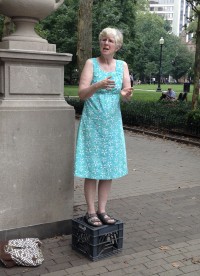 Last night I mentioned the Pledge of Resistance that made a difference in the Keystone XL Pipeline fight. I remembered that a huge number of people signed up, but misremembered what the number was. It was 100,000. You can read more here.
Here’s the info on how to lead a Street Speaking training. As I mentioned, it comes from the Training for Change site, which includes great resources, as well as their own trainings. If you are fired up about creating powerful actions, here are a few exercises from Training for Change that are helpful: Action Storming, which is a brainstorming game, and Finding Tactics that Matter. For more action inspiration, check out Gene Sharp’s famous list of 198 methods of nonviolent action.
If you want some inspiration for thwarting fear, I found it in this article, “How Women in Zimbabwe Overcame a Culture of Fear to Build a Culture of Resistance.” On the fear theme, here are two articles from author Tara Mohr, whose book Playing Big was very helpful to me as I moved into campaign leadership. The first article is “Calling On Fear,” where she mentions that in Hebrew there are two words for fear, and they have very different meanings and require different responses. The second is “Five Strategies for Dealing with Fear.” Although her book and online courses are advertised as “for women,” I agree with her that we all need a “fear toolkit,” especially if we want to change the world.
Related to fear is the issue of perfectionism, which a growing number of people are talking about as part of white supremacy culture (which affects people of all identities). If you want to reflect more on this, here’s an article that explores it.
If you have questions about legal issues around civil disobedience, the National Lawyers Guild has a program specifically to support activists with legal issues. There might be other groups that operate in your area, so don’t forget to ask around and google.
Finally, your class member Manal El Tayar asked me to share info about the Task Force on Psychosocial Support for Local Peacebuilders during Covid-19, initiated by the Mary Hoch Center for Reconciliation. This is short notice, but If you are interested to join the learning exchange, please consider filling out this survey by end of today, May 22. Below is more information.
The Task Force is comprised of leading mental health and peace building practitioners and aims to streamline psychosocial support to local peacebuilders by organizing and sharing online resources, providing trainings and coordinating peer support groups in response to Covid-19. So far, the organizations that have registered for this exchange include UN Women, ICTJ, Conciliation Resources, the White Helmets, Tanenbaum, International Alert and others. On May 26, 9-11 am EST, we will convene a virtual learning exchange to explore key psychosocial support needs among local peacebuilders and opportunities for peacebuilding organizations and networks to further their support during Covid-19. The exchange will also explore opportunities for organizations to collaborate with the Task Force towards increasing psychosocial support to field-based staff and other constituents.