
Farmers’ Almanac predicts a cold winter. I predict that the next several months will be key to thwarting authoritarianism in the United States. For me, some of that work will involve protests outside of ICE or other places where Philadelphians are taking strategic nonviolent action. At the last one I attended, my fingers got numb. That’s why I asked for warmer gloves for Christmas.
Like many writers this month, I’ve been reflecting on both the year that’s ending and the one ahead. Like many, I grieve the increase in political violence in the United States, which is the kind of cycle that is hard to break once it gets momentum. It’s the thing that scares me most at the moment. For one thing, cyclical violence can’t be stopped only at the ballot box. We need a culture shift and a broader consensus that violence will not solve our problems. We have a long way to go on that front.
Part of my work is to show people that nonviolent tactics can make a difference, and there are many 2025 examples worth celebrating. Back in April, I wrote here about the “pillars of power” theory, also being taught as “pillars of support” in many webinars these days. This tool shows that power-holders can be strengthened by other institutions, or weakened when those institutions refuse to cooperate. This is why Donald Trump has spent so much energy bullying universities, intimidating the media, and deploying the National Guard.
The good news is that, after a lot of early capitulation, universities realized that there was no end to Trump’s demands, so they started saying no. Similarly, many media outlets, including Fox News, rejected the president’s restrictions on Pentagon reporting.
The power of ordinary people to influence the pillars was illustrated when Disney suspended comedian Jimmy Kimmel after overt censorship threats from Trump’s FCC chairman. A boycott was hastily organized to defend free speech rights. Unions representing writers, actors, directors, and producers joined. Grassroots and civil liberties groups spread the word. Fans of Andor quoted the anti-imperial characters of the Disney+ show. An estimated 1.5 million customers boycotted Disney, while 2 million cancelled subscriptions to its subsidiary Hulu. In less than a week, Disney’s stock value dropped by $4.99 billion, and the company brought Kimmel back. This has not ended censorship in America, but it was a significant win for free speech and a lesson in the power of the purse.
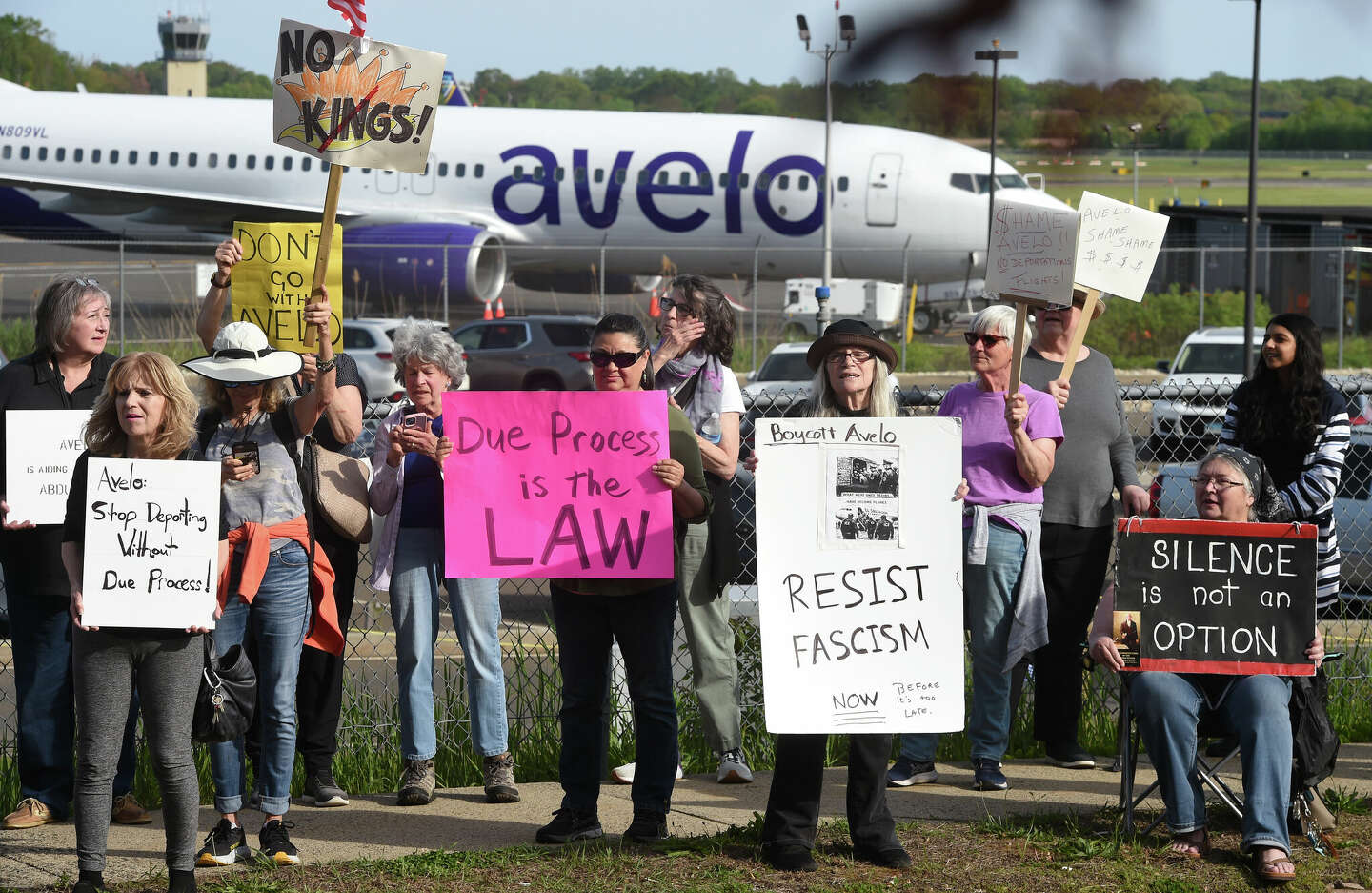
Photo from CT Insider
An ongoing campaign is challenging Trump’s brutal deportation apparatus by boycotting Avelo Airlines, which helps ICE to deport people. Begun this spring by immigration activists in Connecticut, a broad coalition is now trying to get local politicians and flight attendants to remove their support for the company. Protests have spread to airports from Baltimore to Burbank, with Avelo announcing in July that it will close its West Coast operations by the end of the year.
This has not stopped ICE from violently snatching people. None of my analysis is meant to minimize the terror and violence being inflicted on people. Still, it’s important to recognize that many successful movements see small signs of their impact before they see big ones. Part of my role is helping people to recognize the impact they are having so they don’t give up prematurely, which is one of my biggest fears for 2026.
I remember watching this happen during Trump’s first term. In January 2017, five thousand people of all backgrounds showed up to the Philadelphia airport at short notice to oppose Trump’s “Muslim ban”—thousands more in other cities. The policy was thwarted in the courts and the streets, at least for a while. In mid 2018, when protests had died down, an amended version of the ban was allowed by the courts. It’s not a coincidence that Trump achieved more of his agenda in the second half of his term when protests had dwindled. I had the distinct feeling that many people who protested in January 2017 never heard anyone tell them that it had made a difference.
This time, we have more sources sharing that message, from alternative media like Waging Nonviolence (in which Daniel Hunter traces the movement’s development this year) to more mainstream voices. Many are covering the resistance to National Guard deployments in city after city. The question of when soldiers can refuse orders is being debated in the public square, a sign that we are seeing a deeper understanding of resistance than in 2017. That’s good news.
While Trump’s moves to consolidate power are scary, the democratic crisis we are facing could motivate more people to join a movement of movements. Groups previously pitted against each other, such as unions and climate groups, could find common ground in an era when both are under attack.
While this result is far from assured, I was recently heartened by a message from someone in India whom I interviewed for Common Ground. Like many around the world, he has been following US news closely. A long proponent of nonviolence, he said, “What an opportunity to build peace asserting and practicing communities! I am sure the society will emerge stronger and more responsible than ever before. There is no other way out of this.”
May it be so. May we do our best to make it so.
Love and encouragement,
Eileen



Thank you for your reminder of Power that us People have and the encouragement to continue. It’s nicer to read something positive for a change!!